Spaanse druivensoort voor rode wijn. Bobal komt vooral voor in zuidwest Spanje (Valencia, Cuenca en Albacete). Derde rode druivensoort van Spanje met zo´n 100.000 ha aangeplant. Vol kleur. Ook erg geschikt voor rosé.👃 Kersen, pruimen en rood fruit.
Een productieve en vroegrijpe donkerblauwe druivensoort met geen al te dikke schil en een relatief hoog suikergehalte. Het sap is weelderig, fruitig en kan bijna zwoel zoet zijn.
Jonge merlot-wijnen worden gekenmerkt door rijke aroma's van rood en zwart fruit, terwijl in de oudere wijnen tonen van pruim, kreupelhout en kruiden op de voorgrond treden. In de mond is hij zacht met aangename tannines. Vaak wordt hij geassembleerd met de cabernet-sauvignon.
Waar de merlot vroeger een exclusiviteit van de Bordeaux-regio was, wordt de druif nu wereldwijd verbouwd.👃 kers - pruim
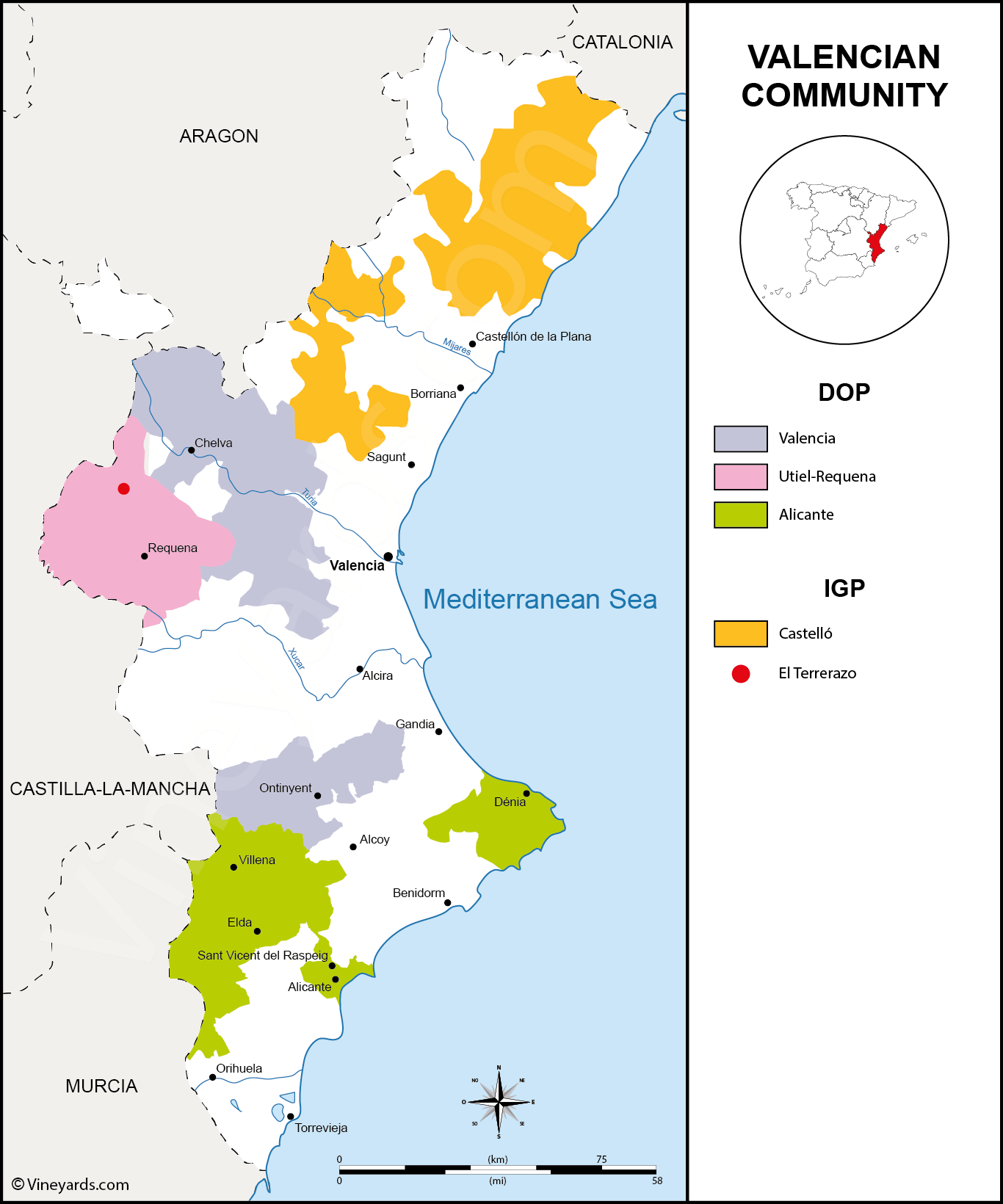
Grupo Coviñas is the leading winery in the DO Utiel-Requena, owner of almost half of the region’s vineyards and which epresents more than 3,000 growers under the banner of cooperativism, and standing for the fair treatment of all cooperative members equality and solidarity as a model of success and as an engine for economic growth. Our objective is to sustain and grow the local economy based on the cultivation of the 10,000 hectares of vineyards belonging to the 3,000 families that make up Coviñas and represent 40% of the wine produced under the Utiel-Requena appellation of origin.
Our success is a combination of several factors: the quality of our wines, the excellence of our service and our ability to adapt to the needs of each and every market.
Sustainability:
> Clean, renewable energy and lower energy consumption: 35% of our electricity consumption comes from renewable sources, including the energy generated by our solar photovoltaic system. Based on the principles of Eco Architecture, we have built our barrel vault and ageing cellar to make maximum use of the contours of the land to create a “cave effect”, providing a naturally constant temperature throughout the year. The upper part of the structure houses the SPVI (solar photovoltaic installation).
Separating to recycle and reduce waste. At Coviñas we separate the materials used in production, such as glass, cardboard, and plastic, and recycle them by means of specific recycling programmes developed in conjunction with our suppliers.
>Eco-design. We choose lightweight bottles and ensure that our labels and packaging are made from recycled materials or come from PEFC- and FSC-certified forests.
>Identifying, conserving, and recovering native grape varieties. We work on the recovery and identification of indigenous and ancestral wine varieties as a source of learning and differentiation and as a guarantee of the future of our vineyards in the face of climate change.
>Commitment to society. Our range of sustainable and environmentally friendly products guarantees this legacy for future generations, as we preserve and protect what is essential while continuing to be the economic engine of entire Requena Utiel area.
Grupo Coviñas is the leading winery in the DO Utiel-Requena, owner of almost half of the region’s vineyards and which epresents more than 3,000 growers under the banner of cooperativism, and standing for the fair treatment of all cooperative members equality and solidarity as a model of success and as an engine for economic growth. Our objective is to sustain and grow the local economy based on the cultivation of the 10,000 hectares of vineyards belonging to the 3,000 families that make up Coviñas and represent 40% of the wine produced under the Utiel-Requena appellation of origin.
Our success is a combination of several factors: the quality of our wines, the excellence of our service and our ability to adapt to the needs of each and every market.
Sustainability:
> Clean, renewable energy and lower energy consumption: 35% of our electricity consumption comes from renewable sources, including the energy generated by our solar photovoltaic system. Based on the principles of Eco Architecture, we have built our barrel vault and ageing cellar to make maximum use of the contours of the land to create a “cave effect”, providing a naturally constant temperature throughout the year. The upper part of the structure houses the SPVI (solar photovoltaic installation).
Separating to recycle and reduce waste. At Coviñas we separate the materials used in production, such as glass, cardboard, and plastic, and recycle them by means of specific recycling programmes developed in conjunction with our suppliers.
>Eco-design. We choose lightweight bottles and ensure that our labels and packaging are made from recycled materials or come from PEFC- and FSC-certified forests.
>Identifying, conserving, and recovering native grape varieties. We work on the recovery and identification of indigenous and ancestral wine varieties as a source of learning and differentiation and as a guarantee of the future of our vineyards in the face of climate change.
>Commitment to society. Our range of sustainable and environmentally friendly products guarantees this legacy for future generations, as we preserve and protect what is essential while continuing to be the economic engine of entire Requena Utiel area.
Spaanse druivensoort voor rode wijn. Bobal komt vooral voor in zuidwest Spanje (Valencia, Cuenca en Albacete). Derde rode druivensoort van Spanje met zo´n 100.000 ha aangeplant. Vol kleur. Ook erg geschikt voor rosé.👃 Kersen, pruimen en rood fruit
Een productieve en vroegrijpe donkerblauwe druivensoort met geen al te dikke schil en een relatief hoog suikergehalte. Het sap is weelderig, fruitig en kan bijna zwoel zoet zijn.
Jonge merlot-wijnen worden gekenmerkt door rijke aroma's van rood en zwart fruit, terwijl in de oudere wijnen tonen van pruim, kreupelhout en kruiden op de voorgrond treden. In de mond is hij zacht met aangename tannines. Vaak wordt hij geassembleerd met de cabernet-sauvignon.
Waar de merlot vroeger een exclusiviteit van de Bordeaux-regio was, wordt de druif nu wereldwijd verbouwd.👃 kers - pruim